
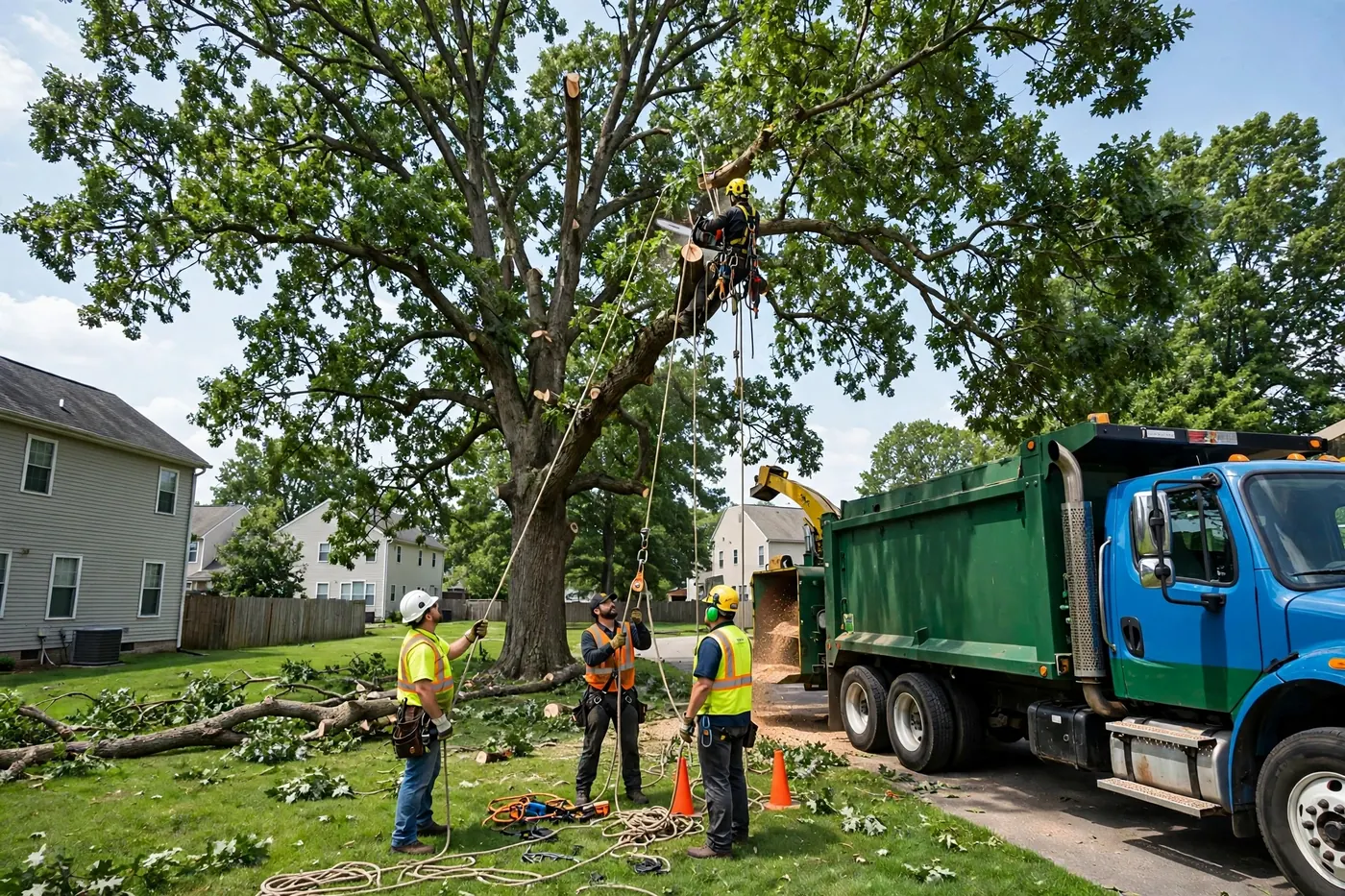
You see the signs before you know the bug. Chewed leaves. Sawdust at the base of the trunk. A sticky mess on the deck. Insects can turn a healthy oak or pine into a dead tree in one or two seasons. The trick is knowing exactly which pest you have — because the right fix depends on the bug. Our crew finds the culprit, treats the tree with the method that fits, and helps the tree recover. If the tree cannot be saved, we will tell you that honestly.
What Is Tree Pest Control?
Tree pest control is targeted treatment for the insects that attack trees. Waldorf's oaks, maples, and pines face real pressure. The spongy moth (once called the gypsy moth) can strip an oak bare in spring. Bagworms hang gray bags from evergreens and eat them down to sticks. Borers — like the emerald ash borer on ash trees — tunnel under the bark and cut off the flow of water and food inside the tree. And the spotted lanternfly, now spreading in Maryland, drains sap from maples and leaves sticky honeydew all over patios, decks, and cars.
Treatment is not "spray everything and hope." We identify the pest first, then match the method to the bug. Leaf-chewing insects get a timed canopy spray while they are feeding. Borers get trunk injections that carry treatment inside the wood, where sprays cannot reach. Scale and mites get dormant oil in late winter, which smothers them before they wake up. Soil-dwelling pests get a root-zone treatment the tree drinks up on its own.
We also treat the stress behind the attack. Bugs hit weak trees hardest. Proper mulch, smart pruning, and the right watering help a tree fight back. A fed, watered tree beats pests better than a stressed one does. That is why pest control works best paired with a tree health inspection — find the bug, fix the stress, and the tree has a real chance.
When You Need It
- Leaves come out chewed, curled, or full of holes.
- You find tiny holes in the bark or piles of sawdust at the base.
- Gray bags or silk tents hang from your evergreens or branches.
- Spotted lanternflies swarm your maples, deck, or patio.
- Whole branches die back with no clear reason.
- A neighbor's trees are infested, and yours are next in line.
- A tree fades fast in one season, and nothing else explains it.
How It Works
- Free on-site visit and pest ID. We walk your whole property — the problem tree and the ones around it. We look for the pest itself, not just the damage: larvae, egg masses, entry holes, and frass (the fine sawdust borers leave behind). The right fix depends on the bug, so this step decides everything that follows.
- Written plan and price. You get a plain-words plan: what the pest is, which trees need treatment, which method we will use, and how many visits it takes. Some pests need one treatment. Some need two visits in a season. You see the full plan — and the price — before we start.
- Targeted treatment. We treat the pest, not your whole yard. For leaf-eaters, a canopy spray timed to when the pest is feeding. For borers, trunk injections that work from inside the tree. For scale insects and mites, dormant oil applied in late winter. For root-zone pests, a soil treatment around the drip line. Each method is chosen for the pest at hand.
- Fix the stress behind the attack. We mulch the base properly, prune out damaged wood, and show you how to water. This step matters more than people think. A tree that is fed and watered grows new leaves faster and walls off borer damage better. If we spot a disease problem too, we will point you to tree disease treatment — because pests and disease often show up together.
- Follow-up check. We come back to see how the tree responds. New leaves, no fresh entry holes, no new egg masses — that is what we look for. If a second visit is needed, it is already in your plan. We also tell you what to watch for between visits, so you catch the next problem early.
What Affects the Cost?
- Tree size and number. A single small dogwood costs less to treat than a 60-foot oak. More canopy means more treatment and more time in the tree.
- How bad the infestation is. An early catch may take one treatment. A tree half-eaten by borers takes more visits, more product, and more follow-up.
- The treatment method. A simple dormant-oil spray costs less than trunk injections or a multi-visit seasonal program. The method follows the pest — we do not upsell a bigger treatment than the bug needs.
- Cleanup and recovery work. Removing egg masses, pruning dead wood, and the check-back visit are part of a complete job, and they are part of the quote.
Every yard is different, so we give a free on-site written estimate. You know the price before we start, and the plan is in writing.
Why Not Do It Yourself?
Here is the honest answer: some of it you can. Picking bagworms off a small shrub by hand? Go for it — drop them in soapy water. But most pest jobs are not DIY-friendly. Store-bought sprays are broad: they kill the good bugs (bees, ladybugs, the ones eating your pests) along with the bad ones. They wash off in rain. And they never reach borers tunneling inside the wood — the most dangerous pests are the ones you cannot see.
Then there is the height problem. Treating a 40-foot canopy means ladders, spray equipment, and protective gear most homeowners do not own. And the biggest money-waster of all is misidentification: treating for caterpillars when the real problem is borers costs you a whole season — and maybe the tree. A pro names the pest first, then treats it once, the right way.
Common Tree Pest Control Mistakes
Mistake 1: Waiting until the tree is half dead. "It looked fine last year" is the most expensive sentence in pest control. By the time a borer-infested tree looks bad from the street, the damage is deep inside. Early treatment is cheaper and works far better. What to do instead: call at the first sign — chewed leaves, sawdust at the base, or branches dying back.
Mistake 2: Spraying first, identifying never. A generic spray from the hardware store rarely matches the pest — and it can kill the beneficial insects that were actually helping you. You spend money, the real pest keeps eating, and the tree keeps declining. What to do instead: get the pest identified before you buy or spray anything.
Mistake 3: Treating one tree and ignoring the rest. Pests spread. Treating the oak while the infested maple next door keeps feeding the colony wastes your money twice. What to do instead: have the whole yard inspected and treat the problem at its source, not just its loudest symptom.
Mistake 4: Hiring the cheapest one-and-done spray. A single cheap spray with no follow-up plan sounds like a deal — until the pest's second generation hatches six weeks later. What to do instead: ask for a written plan that includes a check-back visit. The follow-up is where treatments actually succeed.
Our Service Area
We serve Waldorf, MD and all of Charles County — including La Plata, White Plains, and St. Charles. Bugs do not respect town lines, so if you are anywhere in the county and something is eating your trees, call us.
Get a Free Estimate
Ready when you are. Call or text (240) 213-4913 — or send our short form and we will call you back.
[Call (240) 213-4913 — tap to call: tel:+12402134913]
Free estimate form: Name | Phone | Service needed
We serve Waldorf, MD and all of Charles County.